CONTACT DETAILS
@ info@esti.ie
T +353 1 409 8113
M +353 87 1827015
Outside Office Hours:
Ciarán Curran +353 87 177 6162
OFFICE & LOCATION
Normal Office Hours
Monday-Friday
10:00-16:00 (4:00pm)
@ info@esti.ie
T +353 1 409 8113
M +353 87 1827015
Ciarán Curran +353 87 177 6162
Monday-Friday
10:00-16:00 (4:00pm)
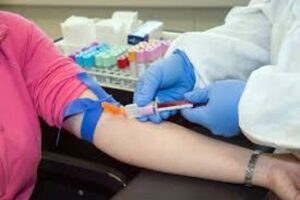
Phlebotomy – the drawing of blood – has been practiced for centuries and is still one of the most common invasive procedures in health care. Phlebotomies are carried out by phlebotomists – people trained to draw blood mostly from veins for clinical or medical testing, transfusions, donations, or research. Blood is collected primarily by performing venipunctures for the collection of minute quantities of blood. The duties of a phlebotomist may include interpreting the tests requested, drawing blood into the correct tubes with the proper additives, accurately explaining the procedure to the person and preparing them accordingly, practicing the required forms of asepsis, practicing standard and universal precautions restoring hemostasis of the puncture site, giving instructions on post-puncture care, affixing tubes with electronically printed labels, and delivering specimens to a laboratory.
This 1 day course is delivered by or qualified Phlebotomist Instructor and it awards 6 CPC points to EMT’s on completion
This course is also excellent for Nurses and other health care staff looking to refresh their skills or learn a new one
No live needle patients or real blood on the training day just lots and lots of practical practice and 1:1 sessions with the equipment
Cannulation training teaches healthcare staff how to safely perform peripheral IV catheter insertion, covering vein anatomy, site selection, insertion technique, complication management, and performance psychology. This segment of training is a must for anyone considering entering health care settings